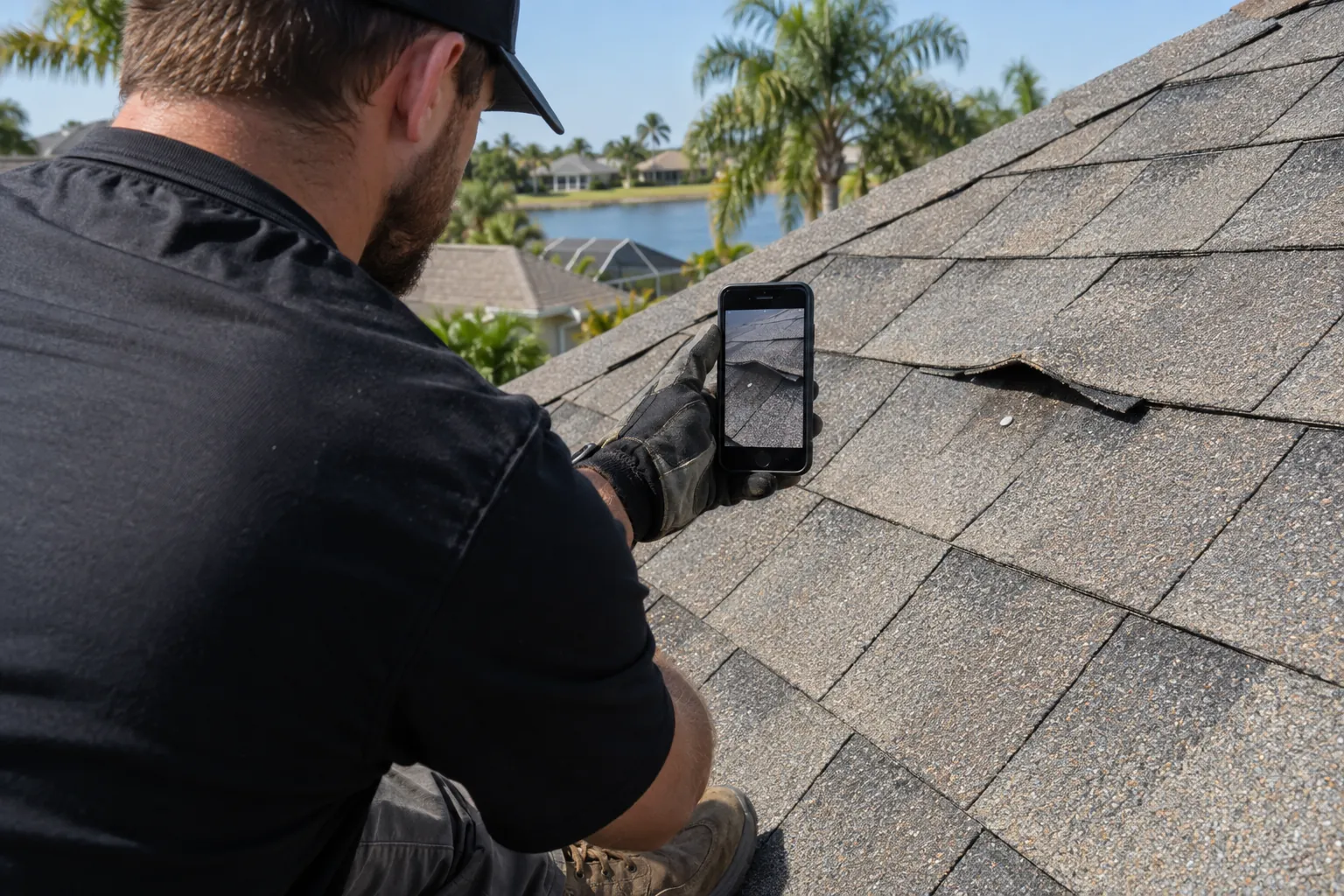

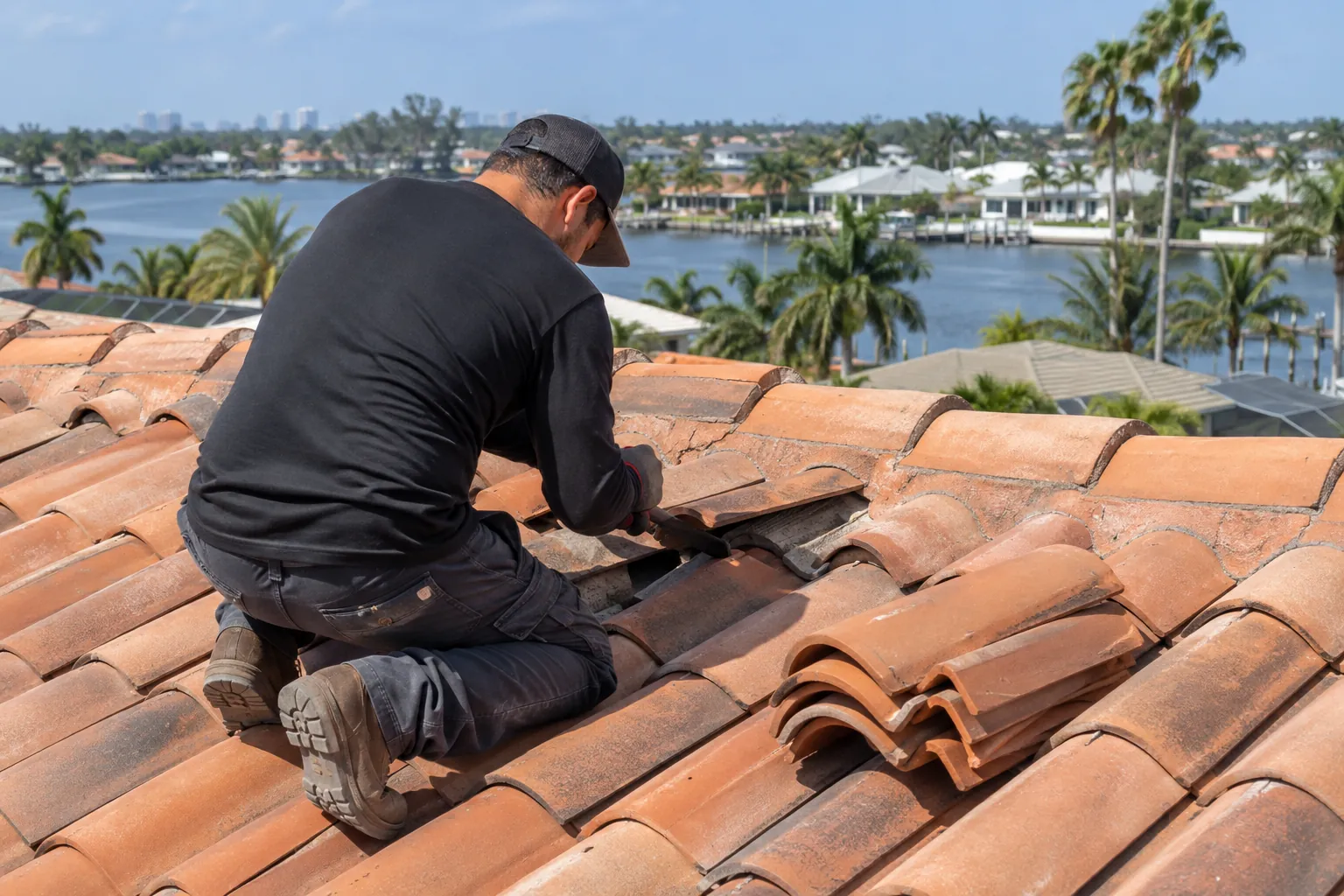
Roof repair
Tile, flashing, vent boots and more.
The stain is not the leak.
Water runs along the decking before it shows on your ceiling. We follow it back to where it gets in, photograph that spot, and price the fix in writing.
Step 1 of 5 · About 2 minutes
Free. No card. The report is yours to keep.
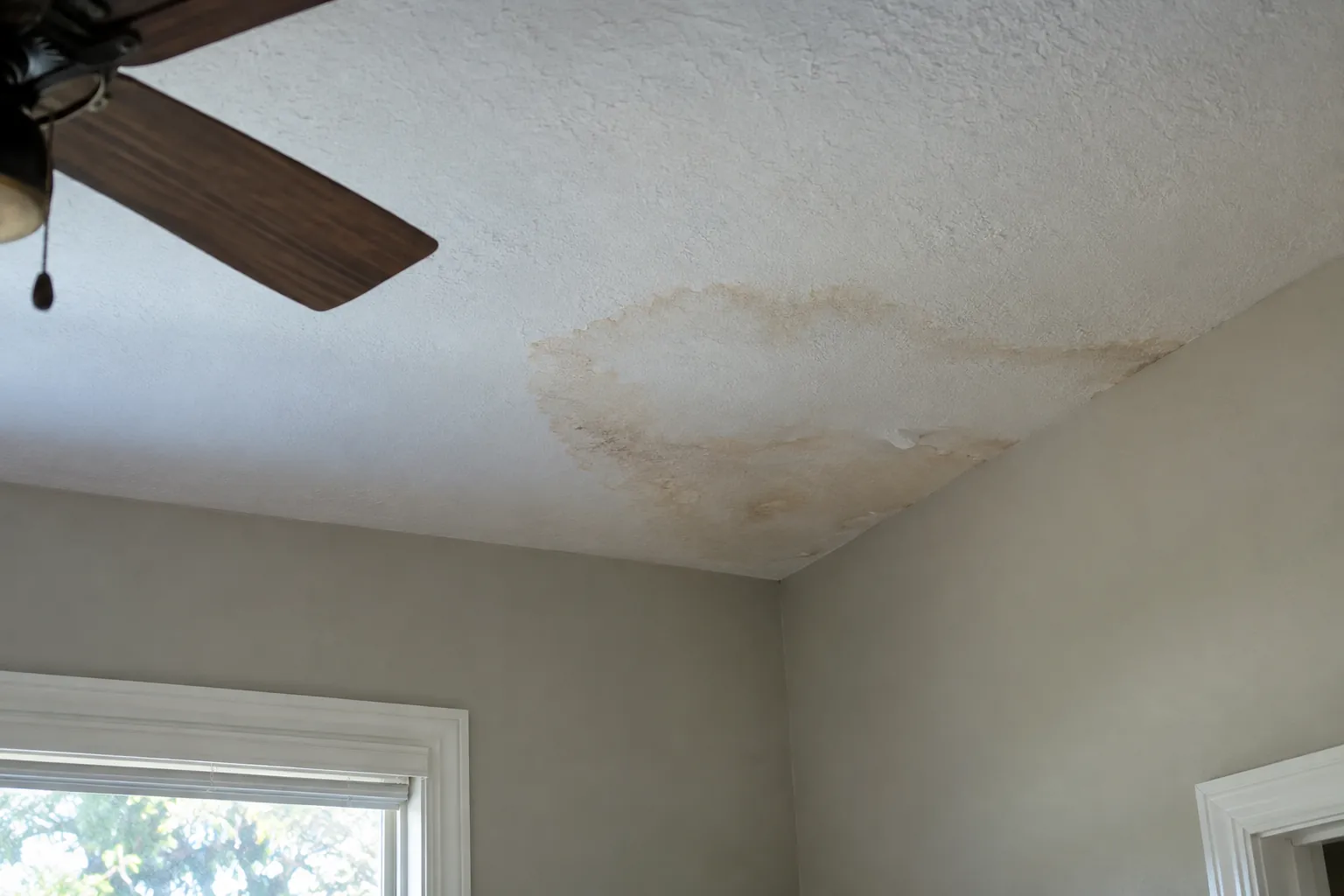
We photograph the wet spot and ask when it shows up: after every rain, or only when the wind drives the rain sideways.
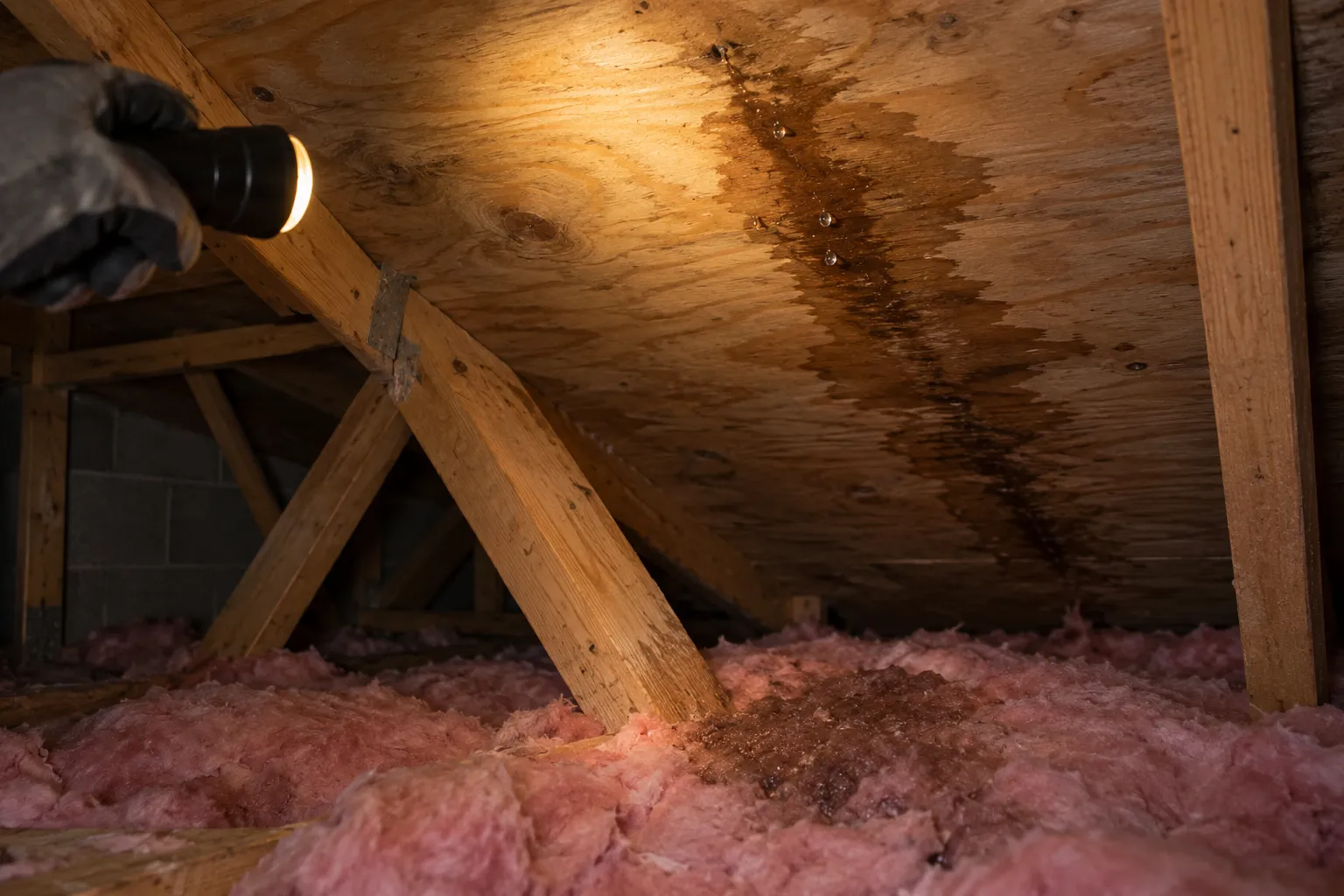
Where the attic is reachable, we follow the wet trail on the underside of the decking toward the spot where it came in.
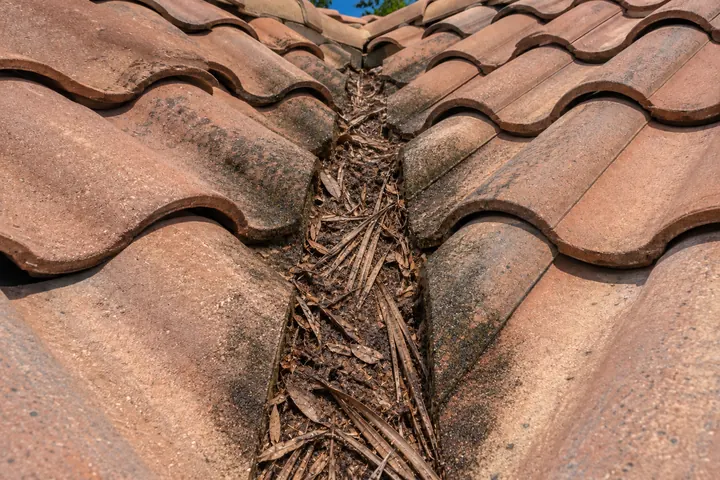
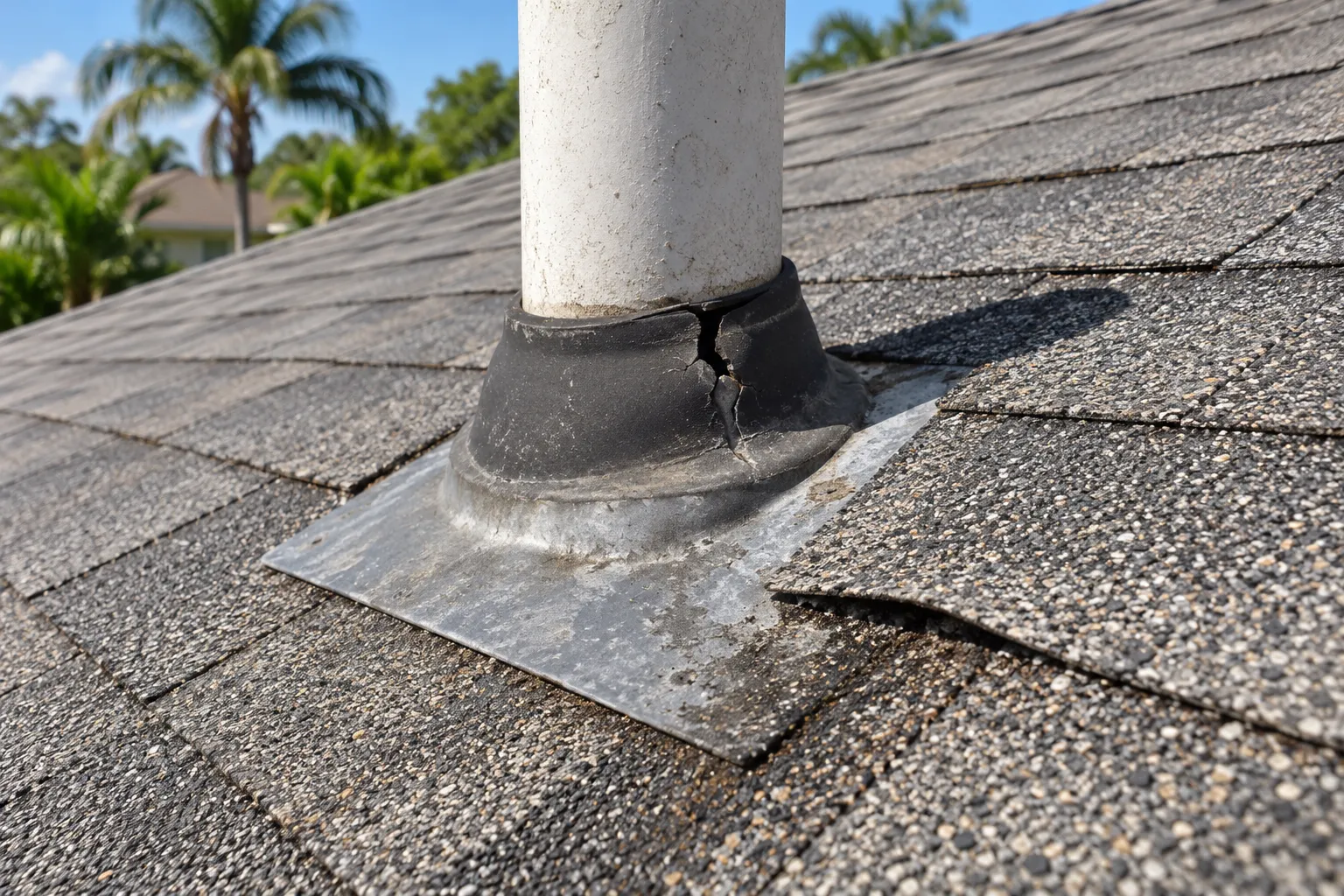
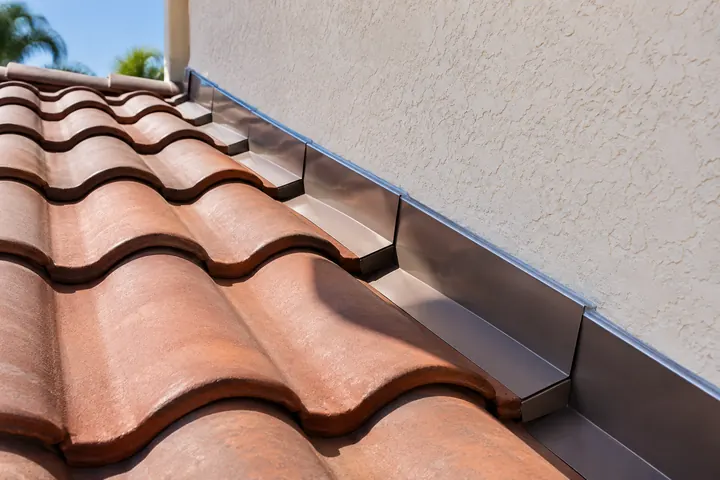
A split vent boot, lifted wall flashing, a packed valley, a cracked tile or an open seam. We photograph it close up.
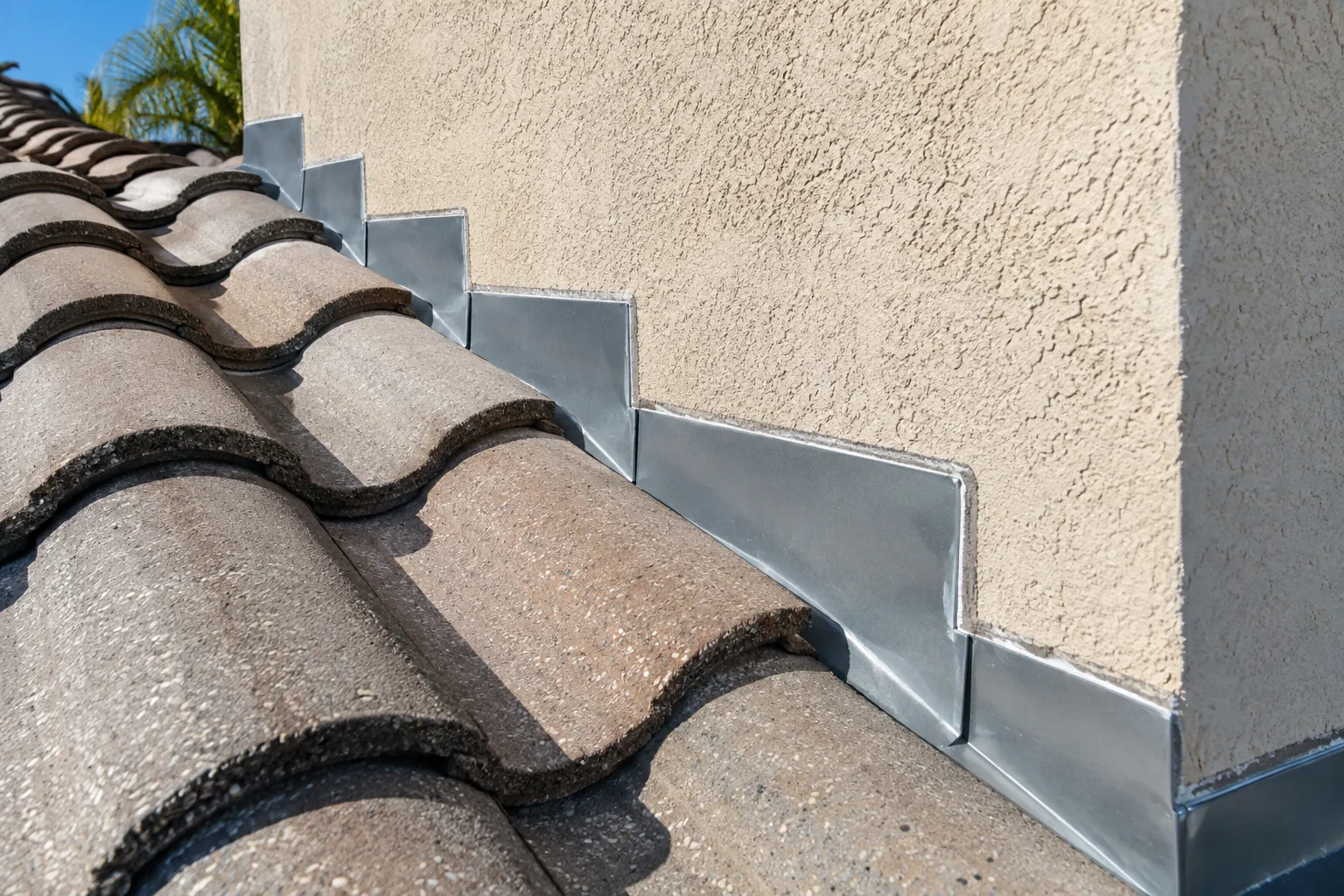
The estimate names the part that failed and the work to fix it, so you know what you are paying for before anything starts.
A small leak rarely stays small. Every storm wets the same patch of roof decking, and plywood that stays wet goes soft and starts to come apart. A repair that needed one vent boot in June can need new decking under it by September.
Inside, wet insulation stops doing its job, drywall stains and then sags, and the damp space above the ceiling is where mold gets started. With afternoon thunderstorms through a Tampa Bay summer, a leak gets wet far more often than it gets a chance to dry out. That is why the first stain is the time to call (813) 413-1757.
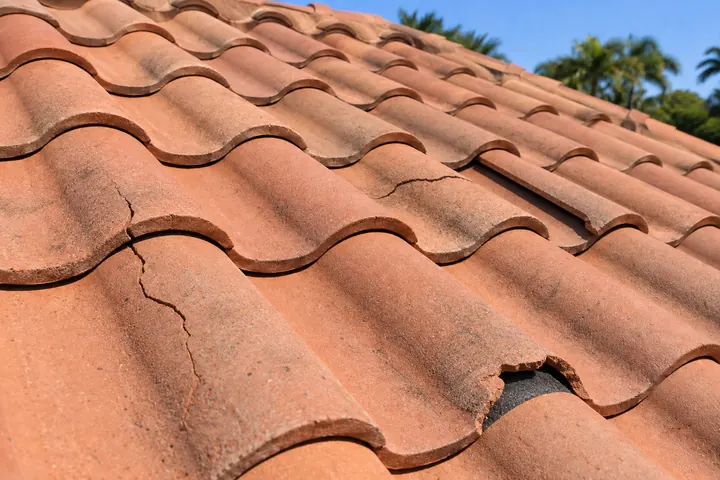
 Under the tile Concrete and clay tile sheds most of the rain. The underlayment below it is the real water barrier, and it can fail while the tile looks fine.
 Shingle vent boots and flashing Rubber vent boots split in the Florida sun, and step flashing lifts where the roof meets a wall.
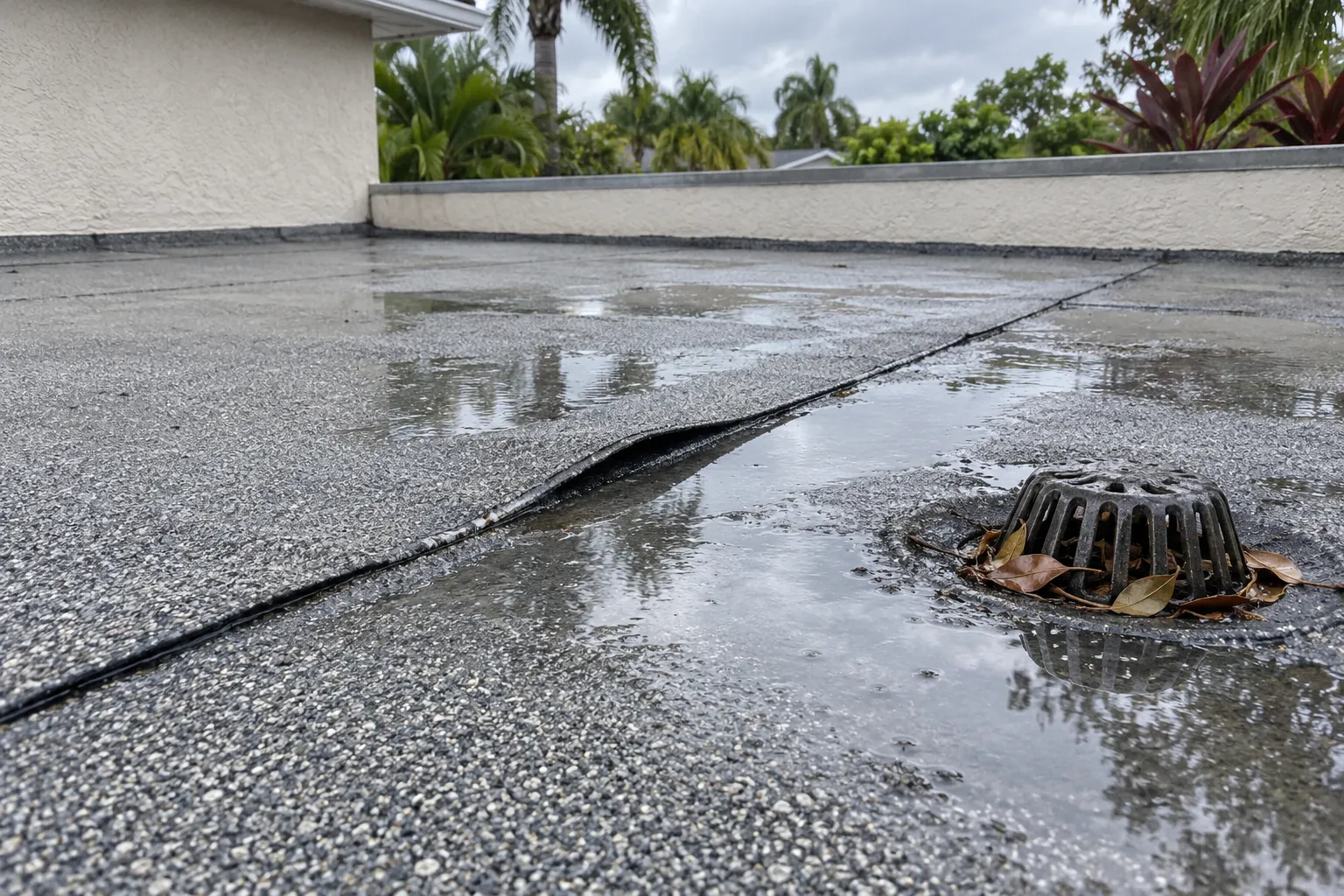 Flat roof seams and drains Water sits on a low-slope roof. It finds an open lap or a clogged drain long before it finds the middle of the membrane.
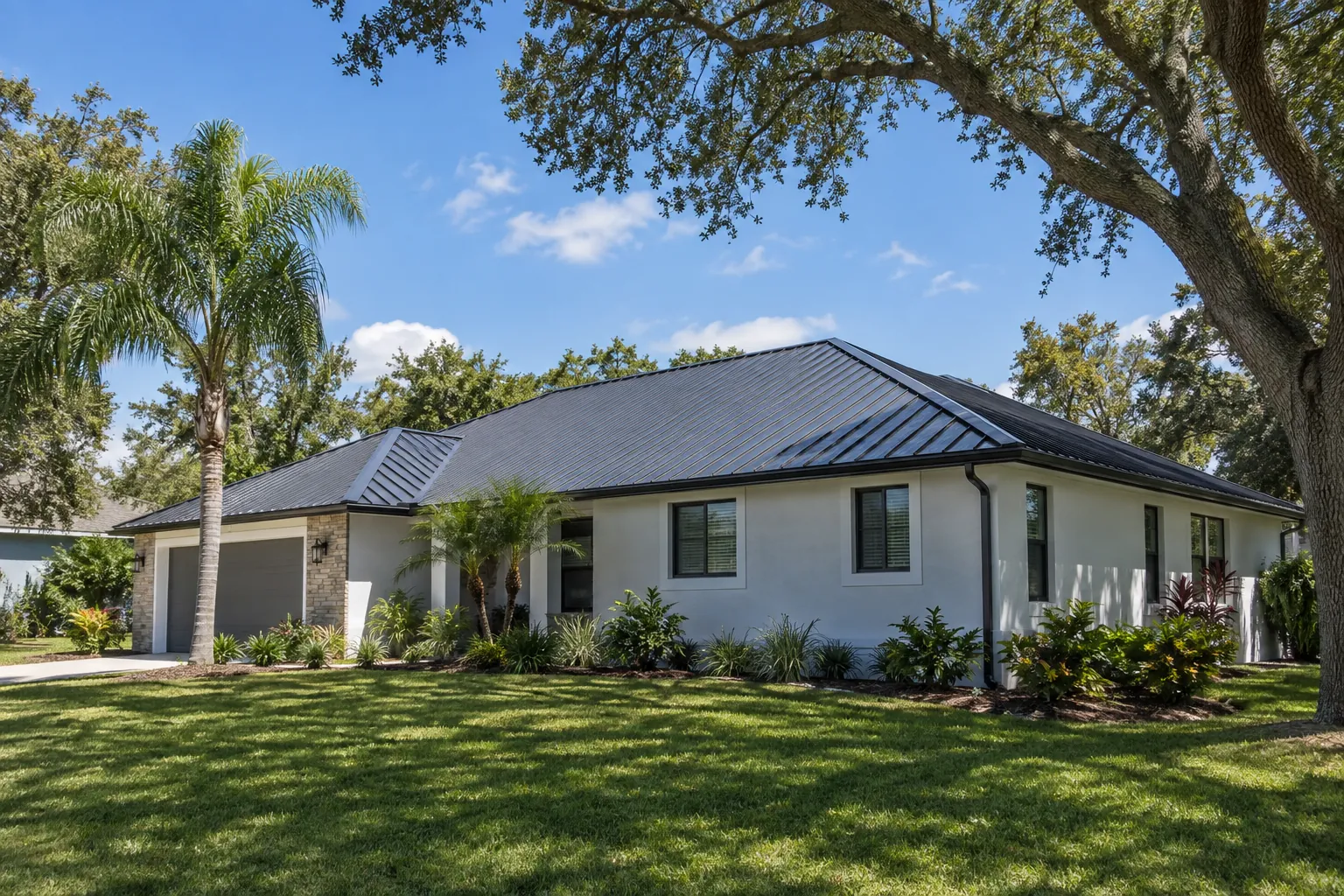 Metal roof screws and laps On exposed-fastener metal, the rubber washers age and the screws back out. Near the water, salt speeds that up.
Stay off the roof. Move furniture and electronics away from the drip, put a bucket under it if you can do that safely, and take a photo of the ceiling. Then call (813) 413-1757.
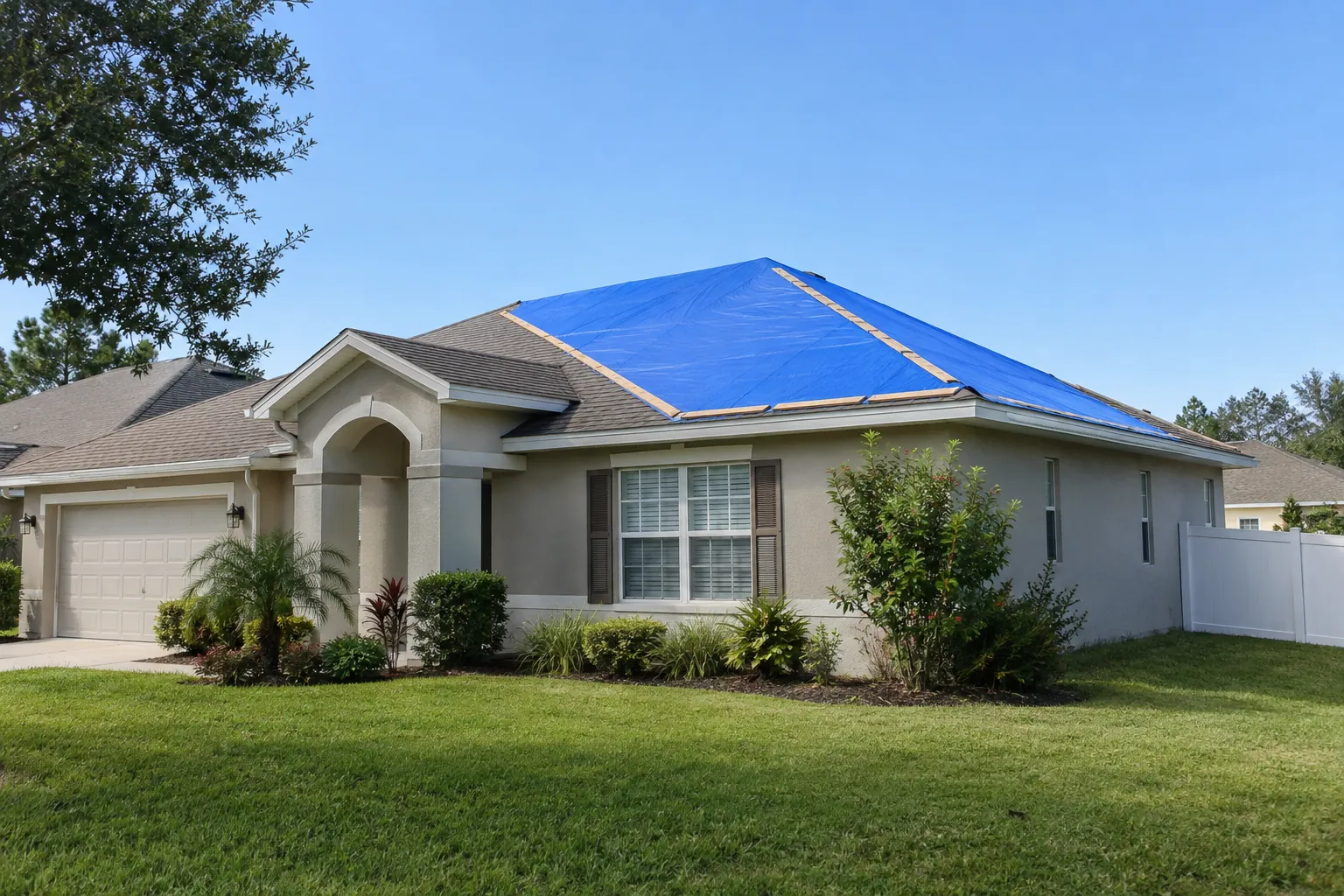
A roof is not repaired in the rain. What stops more water today is a tarp over the opening, and the real repair comes once the roof is dry. Our emergency roof tarping page explains what happens on that visit.
We do not post leak repair prices. The same brown ring on a ceiling can come from a vent boot that takes an hour to replace, or from tile underlayment that has failed across a whole slope. A price quoted before anyone has seen the cause is a guess.
Four things set the price: where the water gets in, the roof material and whether matching tile is still made, how far the water has spread into the decking, and how hard the spot is to reach. Call (813) 413-1757 or book a visit. You get the price in writing, with the photos, before any work starts.
Hillsborough, Pinellas, Pasco, Hernando counties.
Water that gets past the roof runs along the decking, a truss or a pipe until it finds a low point, and that is where the ceiling gets wet. The opening on the roof can be several feet uphill from the stain. That is why we trace the path instead of patching the spot above the stain.
It depends on what is letting the water in, the roof material, and whether water has soaked the decking. A split vent boot and failed tile underlayment are very different jobs. Call (813) 413-1757 and we give you a written price after we have seen the cause.
Your insurance company decides that under your policy, and the cause of the leak matters. Ask your insurer before you file. If you do file, the photos and the written estimate show what we found on the roof and what we propose to fix.
Call (813) 413-1757 and we tell you the first open visit on the phone. You can also pick a day on the booking form. If water is coming in right now, say so when you call.
Not usually. Many leaks come from one part: a vent boot, a section of wall flashing, a cracked tile or an open seam. If a repair fixes it, you hear that first. If the underlayment has failed across several slopes, we show you the photos and explain why a larger job makes sense.
A wet roof is not a safe place to walk, and a repair made in the rain rarely holds. In a storm the first step is a tarp over the opening. The permanent repair is done once the roof is dry.
Pick an open time online. The report is yours, even if you never hire us.
Step 1 of 5 · About 2 minutes
Free. No card. The report is yours to keep.